The One Thing in Ministry No One Can Prepare You For

I have been doing vocational—OK, paid—ministry for five years, and I received some of the best training available that any of us crazy enough to do ministry for work can find. I went to Moody and learned the Bible and how to preach; I went to Wheaton and learned how to make disciples that, you know, are actually disciples. I was mentored and coached by dear, dear people who were and are tremendously fruitful in ministry.

But there is no class, no book, no seminar, no sermon, no conversation, no Tweet, no Bob Goff Instagram pic, no conference, no anything that can prepare you for how hard it is to persevere in ministry.

I’m a full-time pastor doing what I love: I get to preach and make disciples and lead and cast vision. I planted a church at 26 and have been a lead pastor for nearly two years—and now I lead not just the church I planted, but another beautiful church as well. I really am tremendously fortunate (or even blessed) to do what I do each day, and be gainfully employed to boot.

Here’s the thing:  some people read that sentence and thought, his life must be great. I know this because I look at other pastors’ lives—pastors who are doing great work and making real progress and, can you believe it, helping people far from God discover Jesus—and I think, her life must be great.

Then you get to know them, these ministry wizards, and you find out that church ministry is hard, and it’s hard for all of us. It’s hard because, as a pastor, you are constantly scrutinized by the people you serve. It’s hard because you’re constantly torn between managing status-quo expectations and calling people to live beyond themselves. It’s hard because people you thought were right there with you drop out, or even worse, go for your Achilles tendon and disappear. It’s hard because you watch people take huge steps forward, and then take enormous steps back. It’s hard because there’s a million books and conferences out there telling you how to do it better (which implies you aren’t doing it well at all). It’s hard because you dump your heart and soul into this thing, and far too many people just. don’t. really. care. 

I look at Steph all the time and say, “You know what I would tell my sophomore at Moody self? I’d say ‘buckle down, because this is so much harder than you can even imagine.'”

That’s the thing no one can prepare you for—how you have to stick to it, how you have to press in and, if you really want to see good Kingdom work done, press in without ever leaning back. It’s beautiful, yes—tremendously, wonderfully, awe-inspiringly beautiful. But it’s also hard.

But the truth is, and this is important, we don’t do ministry because it’s easy—or get out of it because it’s hard. Or, at least we shouldn’t. We do ministry because we’re called to do it; we do ministry because (and this is something I learned in a class) it’s the only thing we can do, and because it’s the only thing we can do, it’s the only thing we want to do. So, yeah, it’s hard. But it’s also what we have to do because Jesus has asked us to—and if what He says about Himself and the universe and us is true, well, what else could I do with my time that really feels meaningful?

So do yourself a favor: get off the hamster wheel of “the other guy’s got it better than I do.” Stop loving the church you could have if you could do what book you just read said to do, and quit loving the people you might have if they would only, well, you fill in the blank. Instead, choose love, choose contentment, and yes, choose to buckle down. It’s going to be hard, but what’s worth doing that’s easy?

*   *   *   *   *

For if we are beside ourselves, it is for God; if we are in our right mind, it is for you. For the love of Christ controls us, because we have concluded this: that one has died for all, therefore all have died; and he died for all, that those who live might no longer live for themselves but for him who for their sake died and was raised. ~2 Corinthians 5:13-15

On Publishing a Book—Four Years Later

In 2011, high on being a college senior, I was invited to write a book for my college’s publishing wing on some research I’d been doing on social media and spiritual formation.

I. Thought. I. Was. Amazing.

On paper, it was—I wrote a book at 22, got it published, and get a check from royalties every six months. (Let’s just say it’s usually enough for my wife and I to have a meal at the local diner. I’m not talking Scrooge-McDuck-swimming-in-money royalties here.)

To be honest, I’ve not read the book since it was published. When I try, I usually can’t handle more than a paragraph, because it induces that feeling I get when I listen to an audio recording of my voice: ew. 

Today I spent a couple of minutes Googling the book, and did what I shouldn’t do—read some reviews on Amazon. Here’s what I learned.

Taylor Swift is right: haters gonna hate. Seriously, people are nasty online. Good reviews are even a little tepid: “It was OK.” When it’s a bad review, I sound like a luddite ogre who thinks far too much of himself. Writing a book is hard—getting feedback is harder.

Once the book is done, it’s done. I look back and sometimes feel like people are right: I do sound like a luddite ogre who thinks far too much of himself. When I wrote the book, I was proud, I thought I was all that. I was a second-semester senior at a school of over-achievers given a chance to achieve big when I was given the contract. So of course the book drips with a sense of certitude. The problem is, I would write it differently now, but I can’t. Books are weird because they so reflect where you were in that particular stage of life, and the tone seeps through. Now it’s just awkward because people think of me as the me I was four years ago, not the me I am now: (hopefully) more nuanced, humble, and measured in my opinions.

Writing a book isn’t that big of a deal. People are publishing books all day, every day. What was once a stellar accomplishment, achieved by only a few, is now something any guy with a computer can do. So while writing a book feels like a big deal, it’s not. So if you’re an author, simmer down. If you’re a wannabe author whose blogging like crazy, don’t let a published book be the goal post. Because it will hit the shelves, you’ll cash the advance—and you’ll still be you.

Let’s be clear about something: I am tremendously, deeply grateful to those that picked my book and made it their project. But it didn’t change me the way I thought it would, and I’m still me—living my life, which is a mixture of up and down and great and OK and, sometimes, not great.

But every once in a while, I get a check in the mail and take my wife out to dinner at the diner down the street—and it’s always a good date.

2016, So Far—In Books

I read—a lot; when my mind isn’t engaging with new ideas, I’m not at my best. Here’s what I’ve been reading since the year started (and a few I read right as 2015 reached an end).

Bible and Theology

Most books on theology and Scripture are used as I prepare a sermon series—either so I can understand a key theme in the book I’m working through, or for my own personal engagement. 

Not the Way It’s Supposed to Be: A Breviary of Sin by Cornelius Plantinga Jr.

Look to the Rock: An Old Testament Background to Our Understanding of Christ by Alec Motyer

The New International Version Application Commentary: Exodus by Peter Enns

The Five Books of Moses: A Translation and Commentary by Robert Alter

I first read Robert Alter’s text on Old Testament narrative in college; his translation and commentary of the first five books of the Old Testament 41l3S5L5FJL._AC_UL320_SR208,320_.jpgare great fun to read, and his notes on the text are immensely helpful for understanding how Hebrew narrative works. 
Mark (N. T. Wright for Everyone Bible Study Guides) by N.T. Wright

I used N.T. Wright’s guide for my own personal study and benefitted greatly. I’m now working my way through his study on Revelation. 

Ministry and Leadership

Lately I’ve focused less on books on leadership and more on books on discipleship, preaching, and culture. Here’s some highlights. 

Building a Discipling Culture by Mike Breen

This is the book that gives language to discipleship—the book I’ve been looking for. 

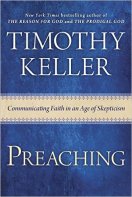
515XatoWK1L._SX331_BO1,204,203,200_.jpgPreaching: Communicating Faith in an Age of Skepticism by Tim Keller

It’s been a really long time since I read a book on preaching, but boy am I glad I read this one. I devoured this volume in a weekend and it’s been tremendously helpful to my preaching in the last few months. It’s quick, helpful, and like all Keller books, filled with thoughts you just didn’t see coming.

Fool’s Talk: Recovering the Art of Christian Persuasion by Os Guinness

One-to-One Bible Reading by David Helm

This is the tool I’ve been looking for in making disciples for a long time. 

Science Fiction and Fantasy

I’ve been reading sci-fi and fantasy novels since The Lord of the Rings captured my imagination in middle school. I usually read these novels before bed, to get out of my head and relax. 

Morning Star: Book III of The Red Rising Trilogy by Pierce Brown

Where the second book in a trilogy is usually the weakest, Morning Star was the hardest book to slog through in this series. 

The Autumn Republic: Powder Mage Series Book 3 by Brian McClellan

The Crimson Campaign: Powder Mage Series Book 2 by Brian McClellan

Caliban’s War: The Expanse Book 2 by James S.A. Corey

The Expanse is now a television drama on the SyFy channel; the first book in this series was tremendous, and each successive volume has been a great read. 

Ready Player One by Ernest Cline

Gatefather: A Novel of the Mither Mages by Orson Scott Card

Orson Scott Card has been a favorite author since high school, when I read Ender’s Game. The Mither Mages series is been classic card: imaginative, fun, with memorable characters.